

What Are the Top 10 Types of Alternative Energy?
As energy demand rises, alternative energy offers more than a cleaner replacement for coal, oil, and gas. It includes technologies that use sunlight, moving air, flowing water, underground heat, organic materials, and ocean movement. Each option has different strengths, costs, environmental effects, and practical limits.
This guide examines ten major types: solar, wind, hydropower, geothermal, biomass, biofuels, tidal, wave, ocean thermal, and hydrogen-based energy systems. The ranking is not absolute. A sunny desert may favor solar power, while a windy coastline may support large wind farms. A mountain community could depend more effectively on hydropower or geothermal heat. Location changes everything.
Real projects also reveal details that charts often miss. Solar panels need suitable roofs or open land. Wind turbines require careful siting near homes, birds, and migration routes. Hydropower can provide steady electricity, yet dams may disrupt river ecosystems. Hydrogen can support industry and storage, but it is an energy carrier, not a primary energy source. That distinction matters.
Reliable comparisons should consider lifecycle emissions, resource availability, grid stability, maintenance, local ecology, and community acceptance. Evidence from agencies such as the International Energy Agency and the Intergovernmental Panel on Climate Change can inform this discussion, but no technology is perfect. Some benefits remain uncertain. Some assumptions deserve challenge.
The top ten types of alternative energy are therefore best understood as complementary tools. Together, they can improve energy resilience while reducing dependence on finite fuels. The right choice depends on evidence, engineering, and local experience.
Defining the Top 10 Alternative Energies with IEA and IRENA Metrics
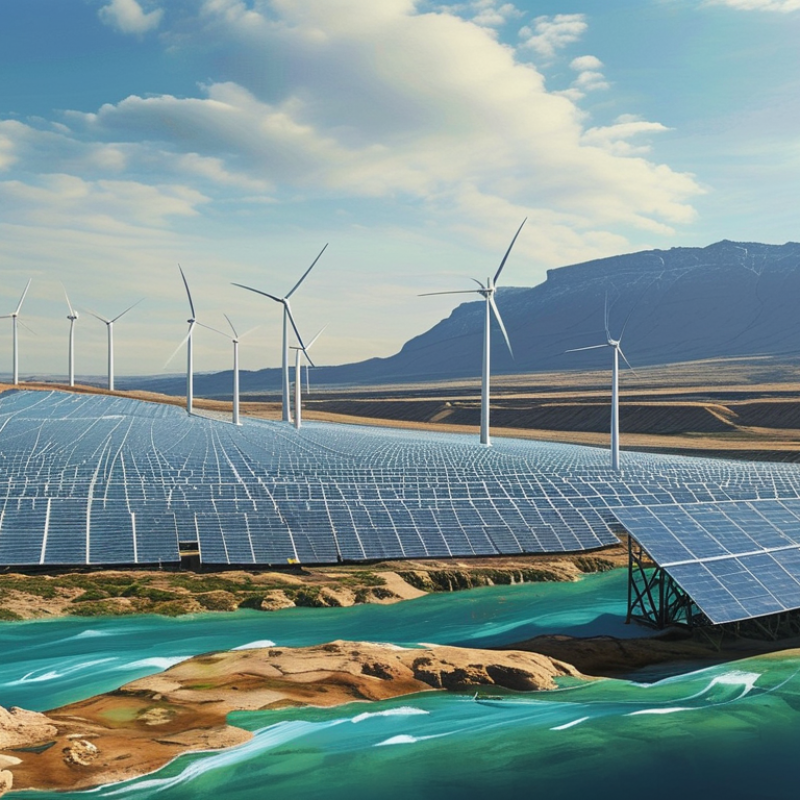
Alternative energy is best compared through installed capacity, electricity generation, reliability, and lifecycle emissions. Based on IRENA’s Renewable Capacity Statistics 2025, global renewable capacity reached about 4,448 GW by the end of 2024. Solar ranked first, with roughly 1,865 GW, followed by hydropower at about 1,283 GW and wind power near 1,133 GW. These figures define three leading energy types: solar photovoltaic and solar thermal, onshore and offshore wind, and conventional or pumped hydropower.
The remaining seven types need more careful measurement. Bioenergy supports power, heat, and fuels, while geothermal offers steady generation from underground heat. Tidal and wave energy use ocean movement, but their commercial capacity remains small. Renewable hydrogen stores clean electricity for industry and transport. Landfill gas captures methane from waste, and renewable waste-to-energy converts selected residues into heat or electricity. The IEA’s Renewables 2024 analysis identifies solar and wind as the main growth engines, yet capacity alone can mislead. A sunny region may produce less power after sunset. Wind output also changes hourly. Hydropower can face drought, and bioenergy depends on sustainable feedstock. Marine technologies remain promising, but their costs and limited deployment require restraint. The ranking is useful, not perfect. Better comparisons should combine IEA market forecasts with IRENA capacity data, local resource quality, grid access, and real operating performance.
What Are the Top 10 Types of Alternative Energy? - Defining the Top 10 Alternative Energies with IEA and IRENA Metrics
| Rank | Alternative Energy Type | How It Works | Global Capacity at End-2023 (GW) |
2023 Capacity Additions (GW) |
IEA Metric or Assessment | Main Strength | Key Limitation |
|---|---|---|---|---|---|---|---|
| 1 | Solar photovoltaic | Solar cells convert sunlight directly into electricity. | 1,419 | 345 | The IEA identifies solar PV as one of the main technologies driving the rapid expansion of renewable electricity. | Modular, scalable and suitable for rooftops and utility-scale projects. | Variable output and dependence on daylight, weather and grid flexibility. |
| 2 | Wind energy | Wind turbines convert the kinetic energy of moving air into electricity. | 1,017 | 116 | The IEA classifies wind as a core clean-energy technology and a major contributor to emissions reduction in the power sector. | High energy yield in suitable onshore and offshore locations. | Variable generation, permitting needs and transmission requirements. |
| 3 | Hydropower | Flowing or stored water turns turbines to generate electricity. | 1,268 | 7 | The IEA regards hydropower as an important source of low-emissions electricity and system flexibility. | Dispatchable generation, storage potential and grid-balancing capability. | Site restrictions, ecological impacts and exposure to hydrological variability. |
| 4 | Bioenergy | Organic materials are converted into heat, fuels or electricity. | 143 | 4 | The IEA includes sustainable bioenergy in pathways for reducing emissions from transport, industry and buildings. | Can provide storable energy and use agricultural, forestry or municipal residues. | Sustainability depends on feedstock sourcing, land use and lifecycle emissions. |
| 5 | Geothermal energy | Heat from the Earth produces steam or directly supplies heating. | 15 | 0.3 | The IEA recognizes geothermal energy as a reliable low-emissions resource with potential for both power and direct heat. | High availability and a small land footprint where resources are accessible. | Geographic concentration, exploration risk and high upfront drilling costs. |
| 6 | Concentrated solar power | Mirrors concentrate sunlight to produce heat and drive a generator. | 8 | 0.1 | The IEA considers solar thermal technologies relevant where dispatchable renewable power and high-temperature heat are needed. | Thermal storage can extend electricity production beyond sunshine hours. | Requires strong direct sunlight and generally has higher costs than solar PV. |
| 7 | Renewable hydrogen | Electrolysers use renewable electricity to split water into hydrogen and oxygen. | Not applicable* | Not applicable* | The IEA treats low-emissions hydrogen as an emerging option for difficult-to-electrify sectors such as steel, chemicals and shipping. | Can store renewable energy and decarbonize selected industrial processes. | Energy losses, electrolyser cost, water requirements and limited infrastructure. |
| 8 | Biogas and biomethane | Microorganisms break down organic matter to produce methane-rich gas. | Included in bioenergy | Included in bioenergy | The IEA identifies biogas and biomethane as options for waste management, heating, power and some transport applications. | Uses wastes and residues while producing a storable gas and potential fertilizer by-products. | Methane leakage, feedstock logistics and sustainability controls are important. |
| 9 | Ocean tidal energy | Tidal currents and changing water levels drive underwater or shoreline turbines. | 0.5 | Less than 0.1 | The IEA treats marine energy as an emerging technology with predictable resource availability but limited commercial deployment. | Tidal cycles are highly predictable compared with wind and solar output. | Marine corrosion, difficult maintenance and relatively high project costs. |
| 10 | Ocean wave energy | Devices capture the mechanical motion of waves and convert it into electricity. | Included in marine | Included in marine | The IEA classifies wave energy as an early-stage marine technology requiring further demonstration and cost reduction. | Large theoretical resource and potential complement to other renewable sources. | Harsh sea conditions, technology durability and limited operating experience. |
Notes: Capacity figures are rounded global renewable-power estimates for the end of 2023, based primarily on IRENA renewable-capacity statistics. Marine energy includes tidal and wave technologies. Renewable hydrogen is an energy carrier rather than a generation-capacity category, so a comparable GW capacity figure is not applicable. IEA assessments describe technology maturity, system value and decarbonization relevance.
Related Posts
-

10 Best Clean Energy Solutions for Global Buyers
-
2026 How to Optimize Power and Energy Efficiency for Sustainable Living?
-
How to Source Clean Energy Solutions for Global Procurement?
-
China Top Power Energy Solutions for Global Buyers?
-
China Top Clean Energy Innovations Transforming the Global Market?
-
Top 10 Clean Energy Innovations Transforming the Future?